
Preconstruction is often the most chaotic phase of a building project. You are juggling dozens of bid packages, hundreds of emails, and a constant stream of questions from subcontractors. When information gets stuck in someone's inbox or buried in a 50-page PDF, you hit a bottleneck.
These bottlenecks do more than just cause stress. They slow down your award process and lead to "scope gaps" that turn into expensive change orders later. If you want to keep your projects on schedule, you need to clear the path for information to flow.
What causes information bottlenecks in preconstruction?
Most bottlenecks happen because information is scattered. A subcontractor might send a clarification via text, a revised bid via email, and a question through a phone call.
Common causes include: * Fragmented communication: Using personal email inboxes instead of a shared system. * Vague proposals: Subcontractors submitting bids that do not clearly state what is included or excluded. * Slow response times: Waiting days for an answer to a simple Request for Information (RFI). * Manual data entry: Typing numbers from a PDF into an Excel sheet, which creates a delay and opens the door for typos.
A study by ResearchGate (2015) on communication between contractors and subcontractors found that poor coordination of design and specification documentation is a primary barrier to project success. When documents are not updated or shared quickly, the entire bidding process stalls.
The real cost of communication delays
When information stops moving, your project loses momentum. You might miss a bid deadline because you were waiting on one trade's numbers. Or worse, you might award a contract based on an incomplete estimate.
As a recent industry report from PlanRadar highlights, 80% of general contractors have experienced disputes or misunderstandings because of communication breakdowns with their subcontractors. These are not just small annoyances. They are risks that can eat your profit margin.
Centralizing bid data to improve flow
The first step to fixing a bottleneck is to stop the "data leak." You need a single source of truth where every bid, every RFI, and every document lives.
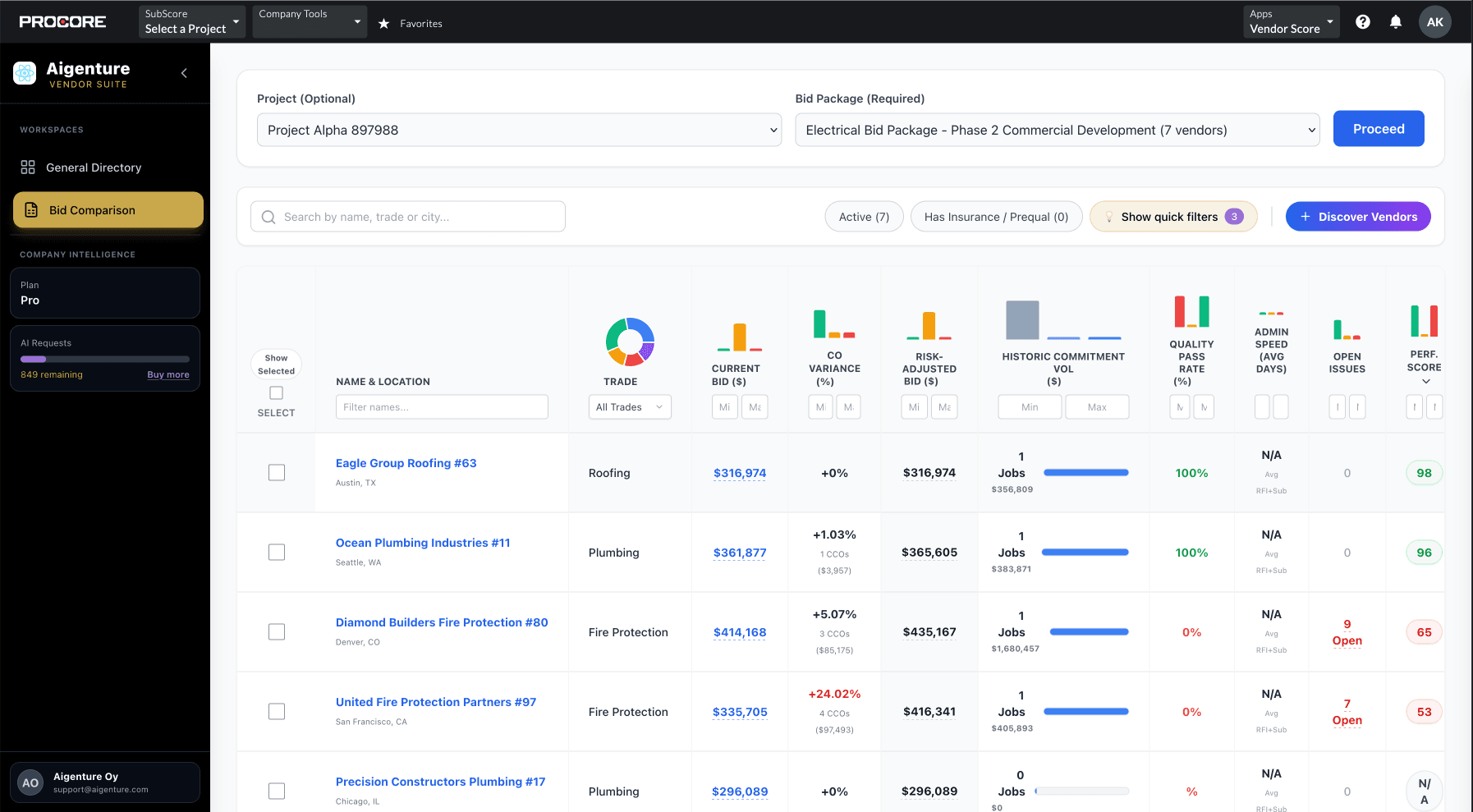
For many teams, Procore is that hub. By keeping all subcontractor communication inside Procore, you ensure that anyone on your team can see the latest status of a bid. You no longer have to ask, "Did we get the updated electrical numbers?" You just check the system.
Moving away from local folders and personal spreadsheets is hard at first, but it is the only way to scale. When your data is centralized, you can start to see patterns and spot delays before they become critical.
Standardizing the bid leveling process
If every subcontractor submits their bid in a different format, your "information flow" hits a wall. You spend hours trying to compare "apples to apples."
To avoid this, you should: 1. Use clear bid packages: Be specific about the scope of work. 2. Provide templates: Ask subcontractors to fill out a standardized form. 3. Set firm deadlines: Make it clear when information is due.
When you standardize how you receive information, you spend less time "cleaning" data and more time analyzing it. You can see which deals are ready to close and which ones need more work.
Using AI to spot missing information instantly
Even with the best templates, subcontractors will miss things. This is where manual review becomes a bottleneck. An estimator might spend a whole day reading through five different proposals just to find out that one plumber forgot to include the fixtures.
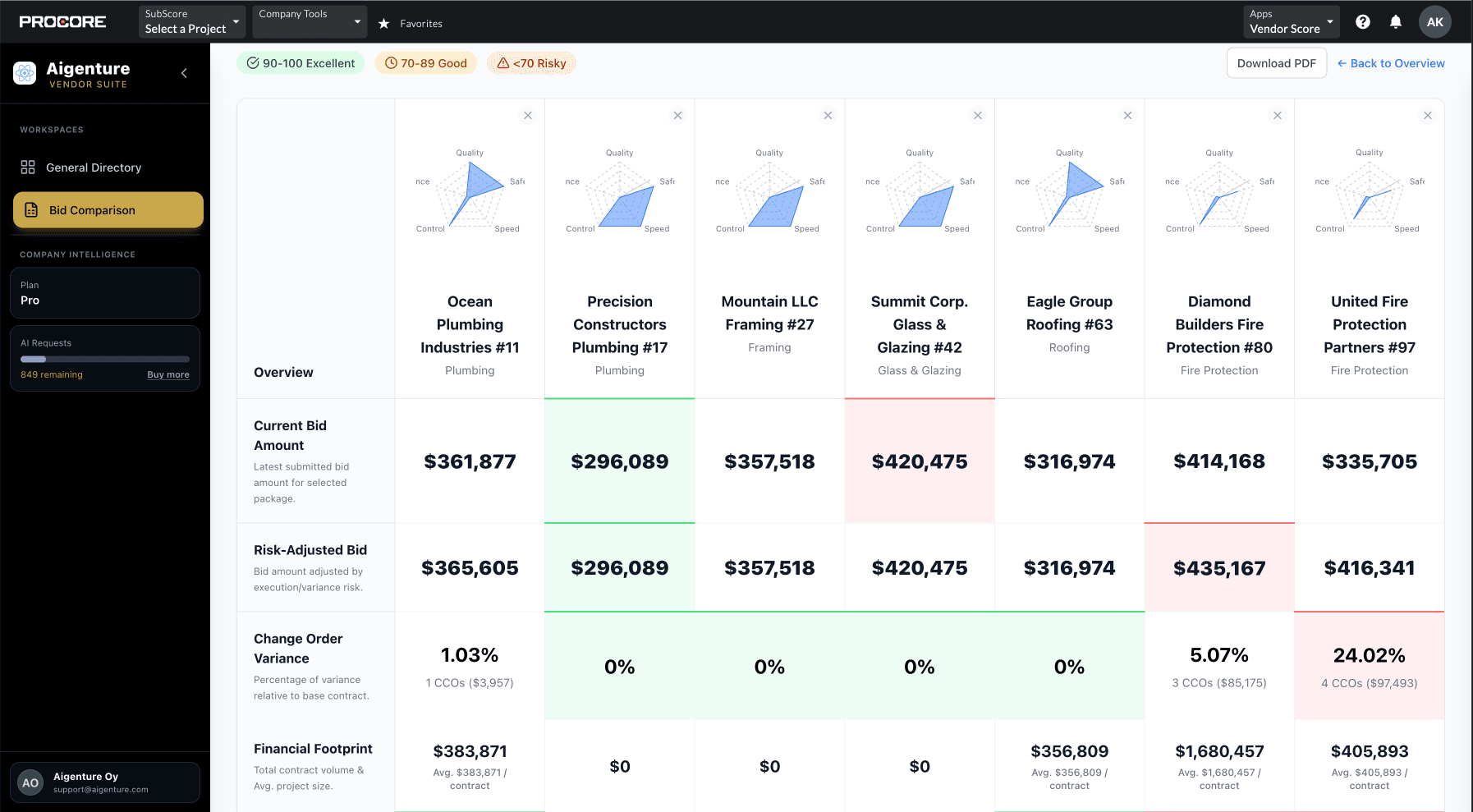
AI can now do this work in seconds. Tools like Aigenture scan your subcontractor proposals and compare them side-by-side. The AI looks for scope gaps and price discrepancies that a human might miss after a long day of looking at spreadsheets.
By catching these errors early, you reduce the back-and-forth communication. Instead of calling a sub to ask what they missed, you can send a clear, data-backed request for clarification immediately.
How Aigenture eliminates subcontractor bottlenecks
Aigenture was built to live inside Procore and solve the exact problem of information flow. It turns your project data into a decision engine.
- Native Procore integration: There is no new software to learn. It works where your team already works.
- Automated bid comparison: See a side-by-side breakdown of every proposal instantly.
- 10x faster evaluations: Spend minutes, not hours, on bid leveling.
- Deep vendor intelligence: Check a subcontractor's past performance and financial health before you award the contract.
If you are tired of chasing subcontractors for information and want to speed up your preconstruction workflow, Aigenture can help. You can View Plans or start a 30-day free trial today to see how AI can clear your bottlenecks.
References
- ResearchGate (2015). "Effectiveness of communication between contractors and sub-contractors: Practices, barriers and enablers." ResearchGate.
- "The True Cost of Poor Communication with Subcontractors." PlanRadar.
- "6 Strategies for Bottleneck-Free Preconstruction." Procore.