
Change orders are often seen as an inevitable part of the construction process. For many general contractors, they are a source of constant friction, budget overruns, and schedule delays. While some changes are truly unavoidable, a significant portion of them can be traced back to the preconstruction phase.
When a project moves from estimating to the field, any missing detail or unvetted risk becomes a potential financial leak. Reducing change orders starts long before the first shovel hits the ground. It requires a disciplined approach to bid analysis and subcontractor selection.
The Real Cost of Change Orders in Construction
The financial impact of a change order goes beyond the direct cost of the work. Every change requires administrative time to document, negotiate, and approve. According to a 2026 guide by Archdesk, change orders can account for 10% to 15% of the total contract value on many projects. This erosion of margin often happens because the general contractor (GC) is forced to pay a premium for work that should have been included in the original bid.
Beyond the money, change orders damage relationships. They create tension between the GC and the owner, who may feel they are being "nickel and dimed." They also cause friction with subcontractors who may feel the scope was unclear from the start. Research by Laksono and Wiyanti (2024) highlights that these modifications in scope and cost are a primary driver of project performance issues. When you reduce change orders, you improve your project's predictability and your firm's reputation.
Common Causes of Preconstruction-Related Change Orders
Most change orders that originate in preconstruction fall into three categories:
- Missing Scope: A subcontractor forgets to include a specific line item, such as fire caulking or site cleanup, and the estimator fails to catch it during bid leveling.
- Unclear Exclusions: A bid includes vague language like "per plans and specs" but then lists exclusions in the fine print that contradict the project requirements.
- Poor Subcontractor Vetting: A subcontractor is hired based on the lowest price, but they lack the manpower or expertise to execute the work, leading to field corrections and "emergency" change orders.
As Wahyu Wibowo (2023) notes in a study on building construction projects, many contract changes occur because of design adjustments or budget corrections that happen after the contract is signed. If these issues are caught during the bid phase, they can be negotiated at market rates rather than "change order rates."
Using Scope Gap Detection to Protect Your Budget
The most effective way to prevent change orders is to find scope gaps before you award the contract. Traditional bid leveling often involves manually typing data from PDF proposals into an Excel spreadsheet. This process is slow and prone to human error. It is easy to miss a single exclusion buried on page five of a ten-page proposal.
AI-powered tools now allow GCs to automate this process. By scanning every proposal and normalizing the data, you can see exactly what is included and what is missing across all bidders. If three subcontractors included "temporary power" and one did not, the system flags that gap instantly.
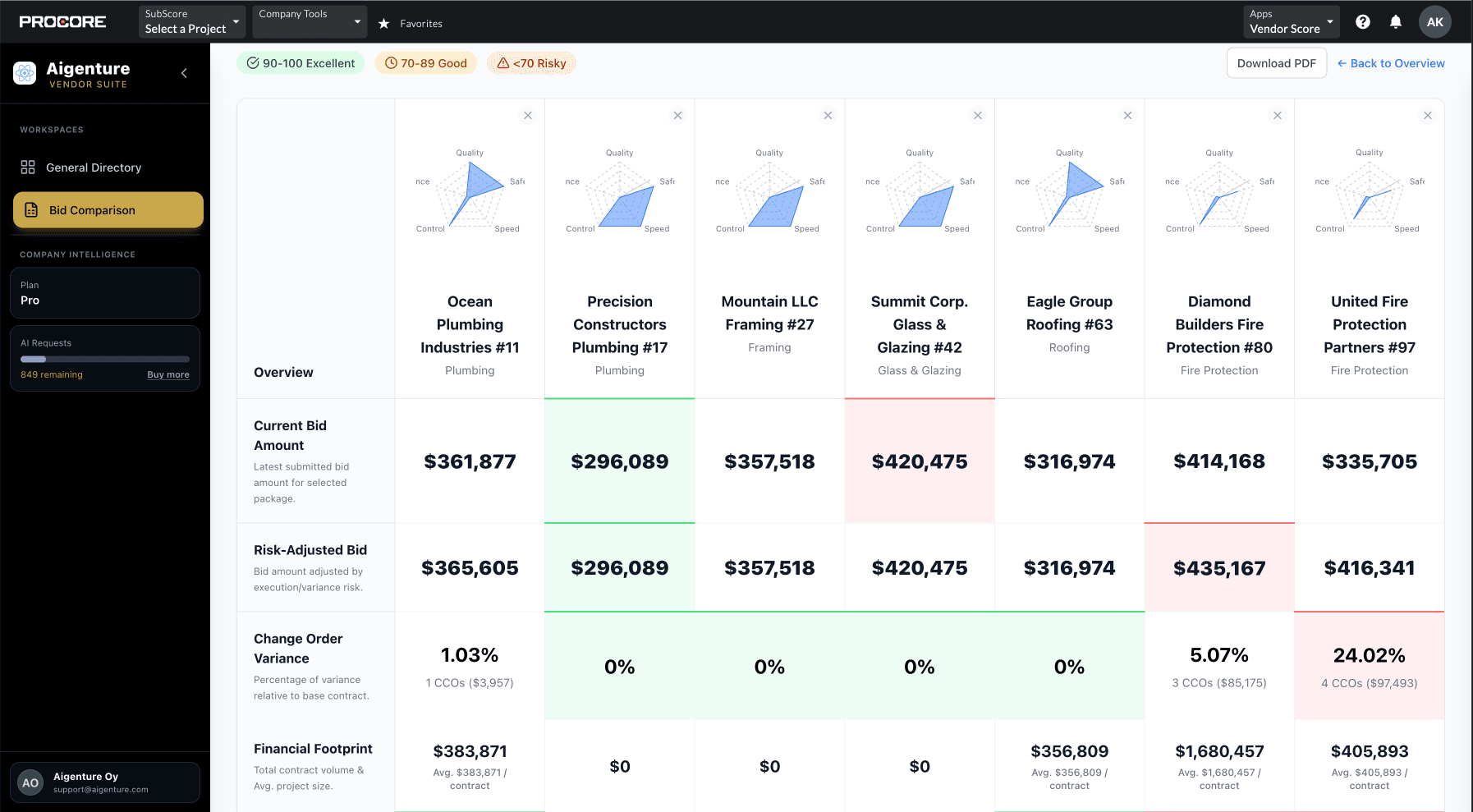
This level of detail ensures an "apples-to-apples" comparison. You are no longer just looking at the bottom-line number. You are looking at the completeness of the bid. Catching a $50,000 scope gap during preconstruction is much easier than trying to find that money in the middle of the project. For more on this, see our guide on Procore bid leveling.
Vetting Subcontractors for Performance, Not Just Price
The "low bid" trap is a major source of change orders. If a subcontractor bids significantly lower than their competitors, there is usually a reason. They might have missed part of the scope, or they might be planning to make up the margin through change orders later.
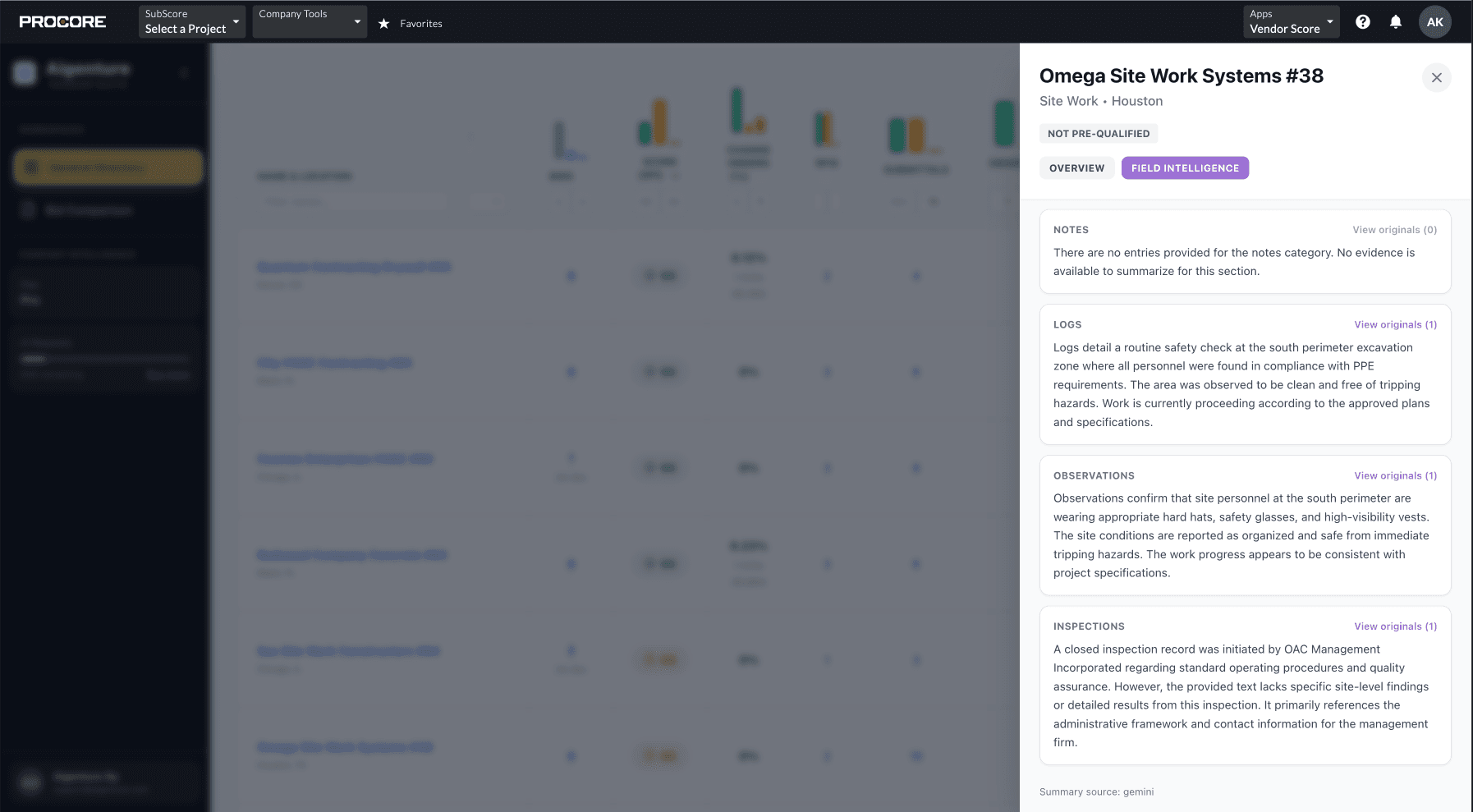
To mitigate this risk, you need to look at historical performance. How often does this subcontractor request change orders? Do they have a history of safety violations or failed inspections?
By integrating field data into your preconstruction workflow, you can see a subcontractor's track record. If a vendor has a high "historical change order percentage," you can factor that into your award decision. This is what we call Procore field intelligence. It turns your past project data into a shield against future risks.
Improving the Handover from Estimating to Operations
A common failure point in construction is the "wall" between the estimating team and the project management team. The estimator might have negotiated a specific exclusion out of a contract, but if that information is not clearly passed to the project manager, a change order might still be approved in the field.
A recent industry report by MeltPlan suggests that GCs who use integrated procurement tools can bridge this gap by keeping all bid-phase notes and clarifications in a single source of truth. When the project team can see exactly what was discussed during the leveling process, they are better equipped to defend the contract scope.
Using a platform like Procore ensures that the final leveled bid, the signed contract, and all supporting documents are accessible to everyone. This transparency prevents subcontractors from "re-negotiating" the scope once they get on site.
How Aigenture Prevents Change Orders Before They Happen
Aigenture was built to solve the problem of fragmented preconstruction data. It lives directly inside Procore and uses AI to help you make smarter award decisions.
- Automated Leveling: Aigenture scans your subcontractor proposals and highlights scope gaps and price discrepancies instantly. You can see which bids are incomplete before you even start your review.
- Deep Vendor Research: Know exactly who you are hiring. Aigenture provides deep intelligence on subcontractor financial stability, safety records, and trade expertise.
- Field-to-Precon Connection: We pull your historical inspection and quality data from Procore and show it to you during the bid process. You can avoid "high-risk" subcontractors based on their actual performance on your past jobs.
- 10x Faster Evaluations: By removing the manual data entry of bid leveling, your team can spend more time analyzing risk and less time formatting spreadsheets.
Reducing change orders is not about being lucky. It is about having better information than your competitors. By using AI to catch scope gaps and vet your trade partners, you can protect your margins and deliver projects more predictably.
Ready to see how Aigenture can help your team? View Plans or Contact Us to start your 30-day free trial.
References
Laksono, T. D., & Wiyanti, D. (2024). "ANALYSIS OF THE CAUSE AND EFFECT OF CONTRACT CHANGE ORDER ON CONSTRUCTION PROJECTS IN BANYUMAS REGENCY." International journal of engineering technology and managememt research.
Wibowo, W. (2023). "ANALYSIS OF CONTRACT CHANGE ORDER (CCO) COSTS IN BUILDING CONSTRUCTION PROJECTS." Asian Journal of Engineering, Social and Health.
"2026 Guide to Construction Change Orders: Safeguarding Your Profits." Archdesk.
"Construction Change Order Management: Process and Best Practices for GCs." MeltPlan.